






Safety Protocol for PIOLET Ice Immersions
1. Purpose
Establish measures, guidelines, and good practices to protect the safety, wellbeing, and physical integrity of participants in ice immersion sessions organized by PIOLET.
2. Scope
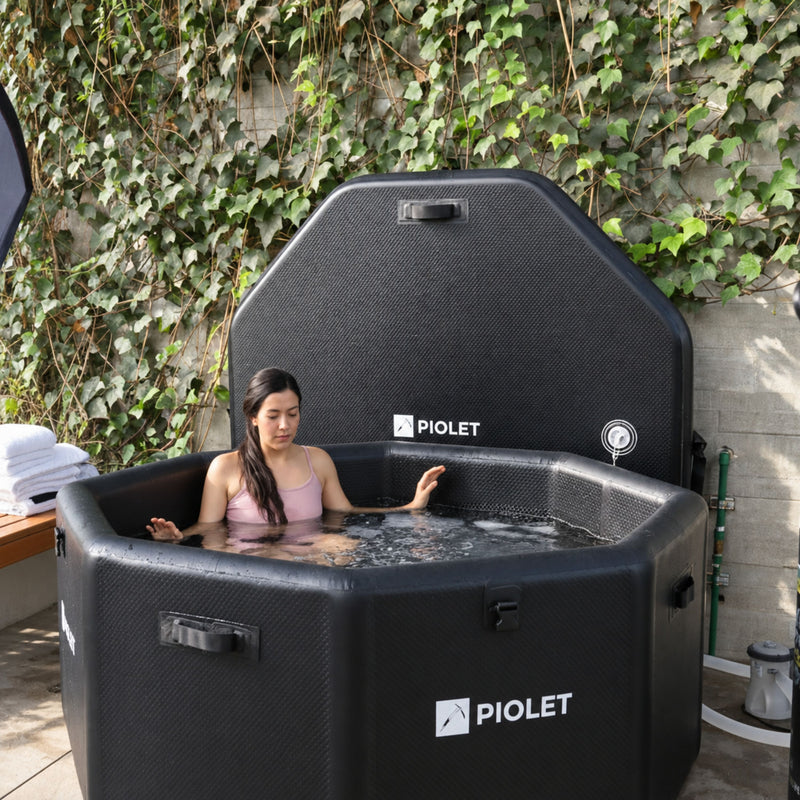
Applies to all ice immersions coordinated by PIOLET, whether on terraces, spas, private rooms, or outdoor spaces, using portable tubs that keep water between 1 °C and 11 °C. Compliance is mandatory for all operating staff and attendees.
3. Potential Risks and Preventive Measures
- Vasoconstriction and increased blood pressure: exposure limit of 3 minutes; controlled temperature and time; constant supervision.
- Hyperventilation, numbness, dizziness, or fainting: prior instruction in conscious breathing; light mobility exercises before entering.
- Vagal reactions: continuous monitoring; immediate attention at any sign of discomfort.
4. Participation Requirements
Signed waiver and declaration of not having:
- Heart disease or uncontrolled hypertension
- Neurological disorders
- Severe respiratory disease
- Pregnancy
Minors only with medical evaluation and written guardian authorization.
PIOLET reserves the right of admission.
5. Required Equipment
- Digital water thermometer
- Visible stopwatch or timer
- Complete first-aid kit
- Thermal blankets (1 for every 2 participants)
- Nitrile gloves, antibacterial gel, and clean towels
- Dry change of clothes
- Phone with emergency access
- (Optional) Automated External Defibrillator (AED)
6. Staff and Supervision
- Guide certified in cold immersion
- At least one person certified in CPR and first aid (Mexican Red Cross or equivalent)
7. Rules for Participants
Before: do not consume alcohol or psychoactive substances for 12 hours beforehand; avoid prolonged fasting or heavy meals; do not do intense exercise in the 30 minutes prior.
During: maximum 3 minutes in the tub; do not submerge the head or make sudden movements; keep breathing calm; follow the guide’s instructions.
After: dry off and change into dry clothes; do light stretches; report any discomfort.
8. Emergency Protocol
- Remove the participant immediately.
- Dry, wrap in a thermal blanket, and keep at rest.
- Assess vital signs.
- Call emergency services (911).
- Start CPR if needed.
- Record the incident for continuous improvement.
9. Control and Records
Signed list with name, date, temperature, duration, and waiver signature.
Document and review every incident, however minor.
10. Limitation of Liability
Participants declare that they have read and understood this protocol, voluntarily assume the risks associated with ice immersion, and release PIOLET, its employees, instructors, and collaborators from any liability for damages, injuries, or losses that may arise directly or indirectly from these activities, except in cases of willful misconduct or gross negligence. This release is an integral part of this protocol.
Guia de decision y operacion
Para mantener una experiencia estable en cualquier setup de recovery, conviene definir un plan operativo sencillo desde el inicio: objetivo principal, frecuencia semanal, espacio real y tiempo disponible para mantenimiento. Esta metodologia evita decisiones improvisadas, reduce friccion de uso y mejora continuidad. Antes de cambiar de modelo o aumentar complejidad, valida primero si tu configuracion actual esta alineada con tu rutina real. Documentar ajustes y resultados durante las primeras semanas ayuda a tomar mejores decisiones y a sostener la practica en el largo plazo.
Guia practica para elegir mejor
Antes de comprar o ajustar tu setup de recuperacion, define un plan sencillo: objetivo principal, frecuencia de uso, espacio disponible y tiempo real para mantenimiento. Evitar improvisacion desde el inicio ayuda a sostener resultados y reduce cambios costosos despues. Tambien conviene documentar aprendizajes de uso durante las primeras semanas para optimizar temperatura, duracion y rutina operativa.
